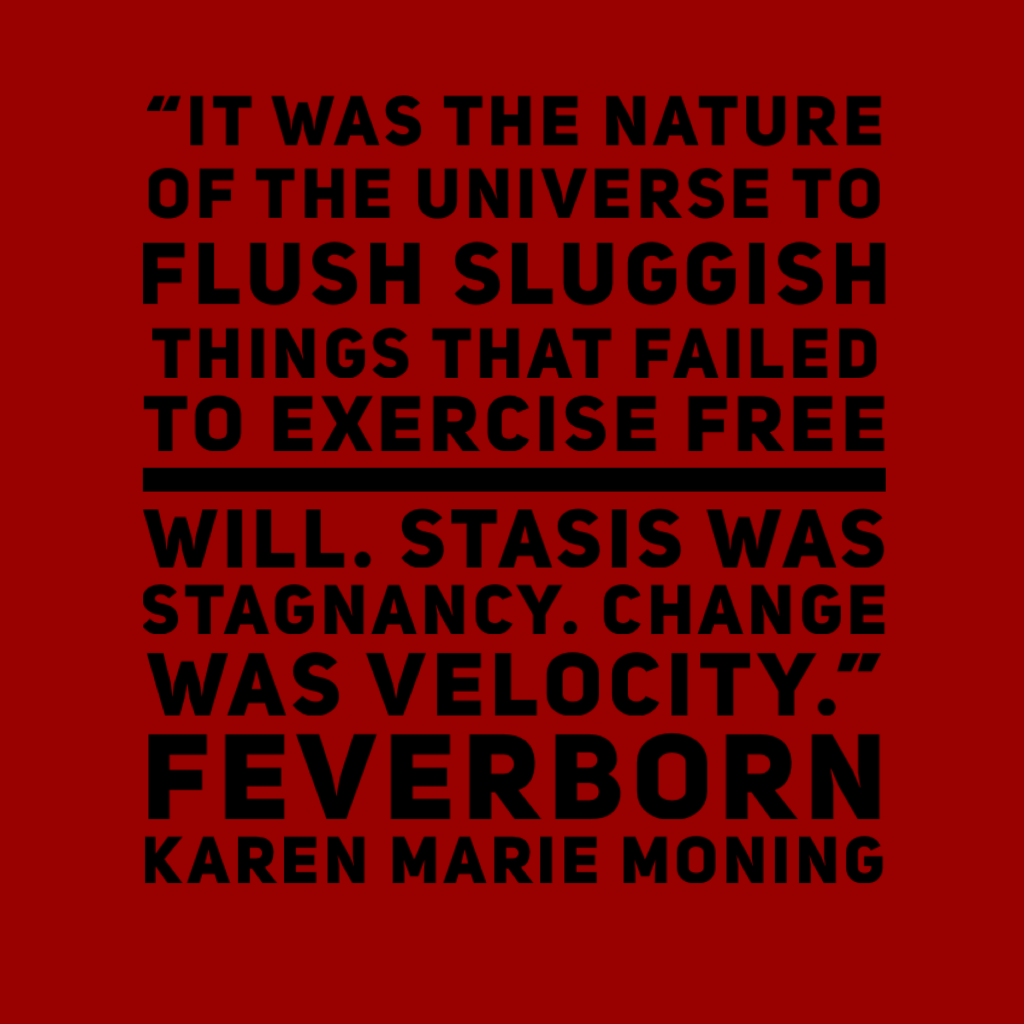
Quotable
Image
Reply

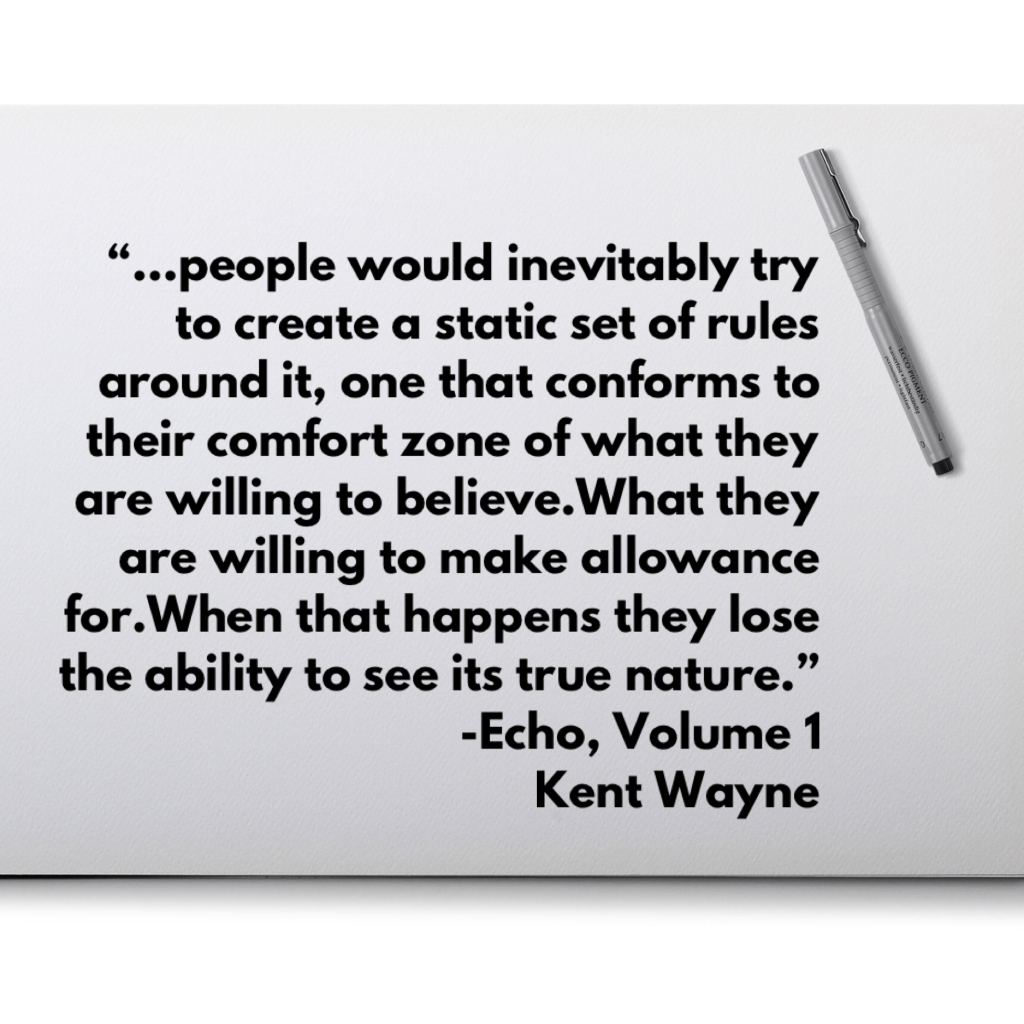
I have so many book quotes saved into my kindle highlights, I thought I’d start sharing. Here’s one from my favorites list. A fantastic dystopic sci-fi series from Kent Wayne.
Writers, do you ever do that thing where you start writing at some random point in your story because you’re feeling it, and it’s the fun and exciting part, only to realize there’s not an organic way to actually get there, so now you have to re-write everything you wrote? Asking for a friend, of course.

Seriously though, after five completed projects, you’d think I’d just start plotting. I say I will and then some exciting epiphany of a scene won’t be ignored and I find I have 15,000 words of a book that hasn’t really come out of the idea phase. It’s possible I just spent the last three days re-working the front quarter of my current project because of this. I just really, really, really wanted the story to get to this specific place, but it just couldn’t. It wouldn’t. Not without being forced. Because it was forced, and you (I) could definitely tell.
I did a lot of sitting and staring. A lot of but what if I did this… Eventually, I had to accept that it wasn’t happening. These characters do write themselves and my simple-mindedness was not smart enough to outwork them. It just means a little patience (okay, a lot of patience) and some extra work. I’ll get to that point I really, really want to show. It’s just going to take a few more (many) pages. And who knows, maybe when I get there for real, there will be an entirely new place there.
This made me feel much better about the growing amount of books I own, and that are sitting on a wishlist in various places about the internet. I absolutely needed to share:
How are we to navigate the unknown — the vast chasm between what we know, what we don’t know, and coming to grips with what is unknowable?
***
This week, I caught myself feeling guilty as I walked into my office and looked at the ever-growing number of unread books.
The library, as I call my office, is full of books I might never get to in my life let alone read this week. My bookshelf, which seems to reproduce on its own, is a constant source of ribbing from my friends.
“You’ll never read all of those,” they say. And they’re right. I won’t. That’s not really how it works.
— Lincoln Steffens
Some questions are only asked by people with a fundamental misunderstanding. The friends who walk into my office and ask, “have you read all of these” miss the point of books.
In his book, The Black Swan, Nassim Taleb describes our relationship between books and knowledge using the legendary Italian writer Umberto Eco (1932-2016).
The writer Umberto Eco belongs to that small class of scholars who are encyclopedic, insightful, and nondull. He is the owner of a large personal library (containing thirty thousand books), and separates visitors into two categories: those who react with “Wow! Signore professore dottore Eco, what a library you have. How many of these books have you read?” and the others—a very small minority—who get the point is that a private library is not an ego-boosting appendages but a research tool. The library should contain as much of what you do not know as your financial means … allow you to put there. You will accumulate more knowledge and more books as you grow older, and the growing number of unread books on the shelves will look at you menacingly. Indeed, the more you know, the larger the rows of unread books. Let us call this collection of unread books an antilibrary.
Taleb adds:
We tend to treat our knowledge as personal property to be protected and defended. It is an ornament that allows us to rise in the pecking order. So this tendency to offend Eco’s library sensibility by focusing on the known is a human bias that extends to our mental operations. People don’t walk around with anti-résumés telling you what they have not studied or experienced (it’s the job of their competitors to do that), but it would be nice if they did. Just as we need to stand library logic on its head, we will work on standing knowledge itself on its head.
A good library is filled with mostly unread books. That’s the point. Our relationship with the unknown causes the very problem Taleb is famous for contextualizing: the black swan. Because we underestimate the value of what we don’t know and overvalue what we do know, we fundamentally misunderstand the likelihood of surprises.
The antidote to this overconfidence boils down to our relationship with knowledge. The anti-scholar, as Taleb refers to it, is “someone who focuses on the unread books, and makes an attempt not to treat his knowledge as a treasure, or even a possession, or even a self-esteem enhancement device — a skeptical empiricist.”
My library serves as a visual reminder of what I don’t know.
Book Review
Kaarina; Unchipped Series #1
By: Taya Devere
Science Fiction, Dystopian
4 Stars
A civilization reliant on AR. Unchipped refugees forced outside its walls. Can a lone underdog save humanity from itself?
In the two years since the Great Affliction, the Happiness-Program has transformed a civilization on the brink of extinction into an organized, beautiful, and happy society. However, for the Unchipped–those whose chips can’t connect to the system–living a comfortable life remains out of reach.
Kaarina, one of the Unchipped, would give anything to live inside the walls of the city again. Haunted by her mother’s suicide and alone except for Bill, another Unchipped thousands of miles away whose thoughts are inexplicably linked to hers, Kaarina fights for survival, defending her beloved animals from the other savage Unchipped. But when her horse’s illness drives her into the city to find medicine, she becomes acquainted with a Chipped man who makes her question everything.
Now a new fix to the system promises her the chance to finally be normal… just as she begins to learn life in the perfectly augmented reality may not be all that she imagined.
This book reminded me of the classic Science Fiction that was one of my first great loves. I, Robot, Brave New World, Childhood’s End, and 1984 were a few that came to mind. Books that told fantastic stories with great societal questions. Books that used a straight-forward writing style, and characters almost naive in their interaction with their world.
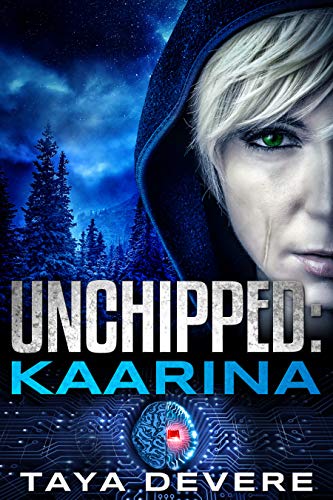
Ms. Devere captures this well, telling a story less far-fetched than these other classics might have seemed in their time. While reading, I was also reminded of The Giver. The tight setting was different through the eyes of the main character than through the rest of the inhabitants, and the questions of what that differing sense meant for the greater population. A bit of a slow start fades away with the adjustment to writing style, especially when Kaarina’s plight becomes more severe than first explained.
I look forward to reading the rest in this serially published universe.
Happy Reading 🙂
 Author C.M. Martens