
This was a great one for Valentine’s Day, but I missed it. Dedicated to those of you having to take your SO out the day after.
Share a favorite quote in the comments 🙌 Help me add to my collection.
This was a great one for Valentine’s Day, but I missed it. Dedicated to those of you having to take your SO out the day after.
Share a favorite quote in the comments 🙌 Help me add to my collection.
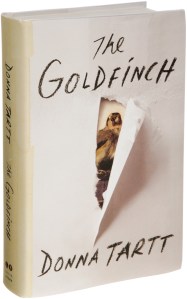
“And as much as I’d like to believe there’s a truth beyond illusion, I’ve come to believe that there’s no truth beyond illusion. Because, between ‘reality’ on the one hand, and the point where the mind strikes reality, there’s a middle zone, a rainbow edge where beauty comes into being, where two very different surfaces mingle and blur to provide what life does not: and this is the space where all art exists, and all magic. And—I would argue as well—all love. Or, perhaps more accurately, this middle zone illustrates the fundamental discrepancy of love. Viewed close: a freckled hand against a black coat, an origami frog tipped over on its side. Step away, and the illusion snaps in again: life-more-than-life, never-dying. Pippa herself is the play between those things, both love and not-love, there and not-there. Photographs on the wall, a balled-up sock under the sofa. The moment where I reached to brush a piece of fluff from her hair and she laughed and ducked at my touch. And just as music is the space between notes, just as the stars are beautiful because of the space between them, just as the sun strikes raindrops at a certain angle and throws a prism of color across the sky—so the space where I exist, and want to keep existing, and to be quite frank I hope I die in, is exactly this middle distance: where despair struck pure otherness and created something sublime. And that’s why I’ve chosen to write these pages as I’ve written them. For only by stepping into the middle zone, the polychrome edge between truth and untruth, is it tolerable to be here and writing this…”
-The Goldfinch, location 12466
“Instructors could teach the basic techniques and methods, but a mastery of mechanical knowledge could never make a person an artist. No one could teach creativity or invention. A spark needed to come from within. It must be something unique, something discovered by the individual, a leap of understanding, a burst of insight, the combining of common elements in an unexpected way.” -Riyria Chronicles

This made me feel much better about the growing amount of books I own, and that are sitting on a wishlist in various places about the internet. I absolutely needed to share:
How are we to navigate the unknown — the vast chasm between what we know, what we don’t know, and coming to grips with what is unknowable?
***
This week, I caught myself feeling guilty as I walked into my office and looked at the ever-growing number of unread books.
The library, as I call my office, is full of books I might never get to in my life let alone read this week. My bookshelf, which seems to reproduce on its own, is a constant source of ribbing from my friends.
“You’ll never read all of those,” they say. And they’re right. I won’t. That’s not really how it works.
— Lincoln Steffens
Some questions are only asked by people with a fundamental misunderstanding. The friends who walk into my office and ask, “have you read all of these” miss the point of books.
In his book, The Black Swan, Nassim Taleb describes our relationship between books and knowledge using the legendary Italian writer Umberto Eco (1932-2016).
The writer Umberto Eco belongs to that small class of scholars who are encyclopedic, insightful, and nondull. He is the owner of a large personal library (containing thirty thousand books), and separates visitors into two categories: those who react with “Wow! Signore professore dottore Eco, what a library you have. How many of these books have you read?” and the others—a very small minority—who get the point is that a private library is not an ego-boosting appendages but a research tool. The library should contain as much of what you do not know as your financial means … allow you to put there. You will accumulate more knowledge and more books as you grow older, and the growing number of unread books on the shelves will look at you menacingly. Indeed, the more you know, the larger the rows of unread books. Let us call this collection of unread books an antilibrary.
Taleb adds:
We tend to treat our knowledge as personal property to be protected and defended. It is an ornament that allows us to rise in the pecking order. So this tendency to offend Eco’s library sensibility by focusing on the known is a human bias that extends to our mental operations. People don’t walk around with anti-résumés telling you what they have not studied or experienced (it’s the job of their competitors to do that), but it would be nice if they did. Just as we need to stand library logic on its head, we will work on standing knowledge itself on its head.
A good library is filled with mostly unread books. That’s the point. Our relationship with the unknown causes the very problem Taleb is famous for contextualizing: the black swan. Because we underestimate the value of what we don’t know and overvalue what we do know, we fundamentally misunderstand the likelihood of surprises.
The antidote to this overconfidence boils down to our relationship with knowledge. The anti-scholar, as Taleb refers to it, is “someone who focuses on the unread books, and makes an attempt not to treat his knowledge as a treasure, or even a possession, or even a self-esteem enhancement device — a skeptical empiricist.”
My library serves as a visual reminder of what I don’t know.

This Wednesday’s indie author shout out goes to Logan Miehl whose first 2 books in her Faerie Festival Series are excellent. Some Folk of the Air mixed with A Court of Thorn and Roses. If you love modern takes on the Fae and humans co-mingling, you’ll love it. I’ve been reading a lot of this genre, and trust me, you want to add this to your list.
Have a great indie you want to suggest? Tell me in the comments or find me on Instagram 🙂
 Author C.M. Martens