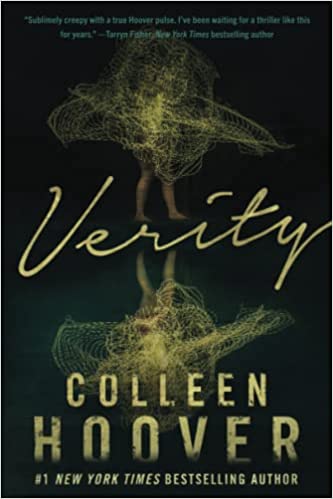
Lowen Ashleigh is a struggling writer on the brink of financial ruin when she accepts the job offer of a lifetime. Jeremy Crawford, husband of bestselling author Verity Crawford, has hired Lowen to complete the remaining books in a successful series his injured wife is unable to finish.
Lowen arrives at the Crawford home, ready to sort through years of Verity’s notes and outlines, hoping to find enough material to get her started. What Lowen doesn’t expect to uncover in the chaotic office is an unfinished autobiography Verity never intended for anyone to read. Page after page of bone-chilling admissions, including Verity’s recollection of the night her family was forever altered.
Lowen decides to keep the manuscript hidden from Jeremy, knowing its contents could devastate the already grieving father. But as Lowen’s feelings for Jeremy begin to intensify, she recognizes all the ways she could benefit if he were to read his wife’s words. After all, no matter how devoted Jeremy is to his injured wife, a truth this horrifying would make it impossible for him to continue loving her.
This was my first Colleen Hoover novel. I really think I fell into that over-hype-ruined-my-experience experience with this one. I’d heard so much about the ‘crazy twist,’ that I spent too much time trying to find it. I don’t really do that as I read. I don’t like to make reading a job; I just want to be caught up in the story and let it happen.
Still, right away, I was curious. I was eager to read. At 40%, I was in it; properly tense, flipping pages, excited to continue forward. By 65%, I was a little like, ‘okay, got it, can we move on to the next phase, please.‘ I may have done a little skimming at this point… This is where my rating fell off. When a book feels tedious to read, for any amount of time, stars fall.
When I reached the end, I was satisfied. I hate not knowing if my less-than-5-star review had to do with this hyped-anticipation that forced me to read with an over-analytical eye. This is why I try not to watch movie previews anymore (ever since Terminator 2 when they ruined the big reveal by telling you ahead of time–I still haven’t gotten over that).
If you like psych thrillers mixed with romantic suspense, this is a good one. Just read it without trying to figure it all out ahead of time. Just let it come. Unless, of course, that’s your thing. If it is, It’s still worth the read.
Happy Reading 🙂
I’ve started a Facebook group to talk about books. If you have anything to say about this book or any others, come join. I am always looking for people to talk books with.Click here to join.
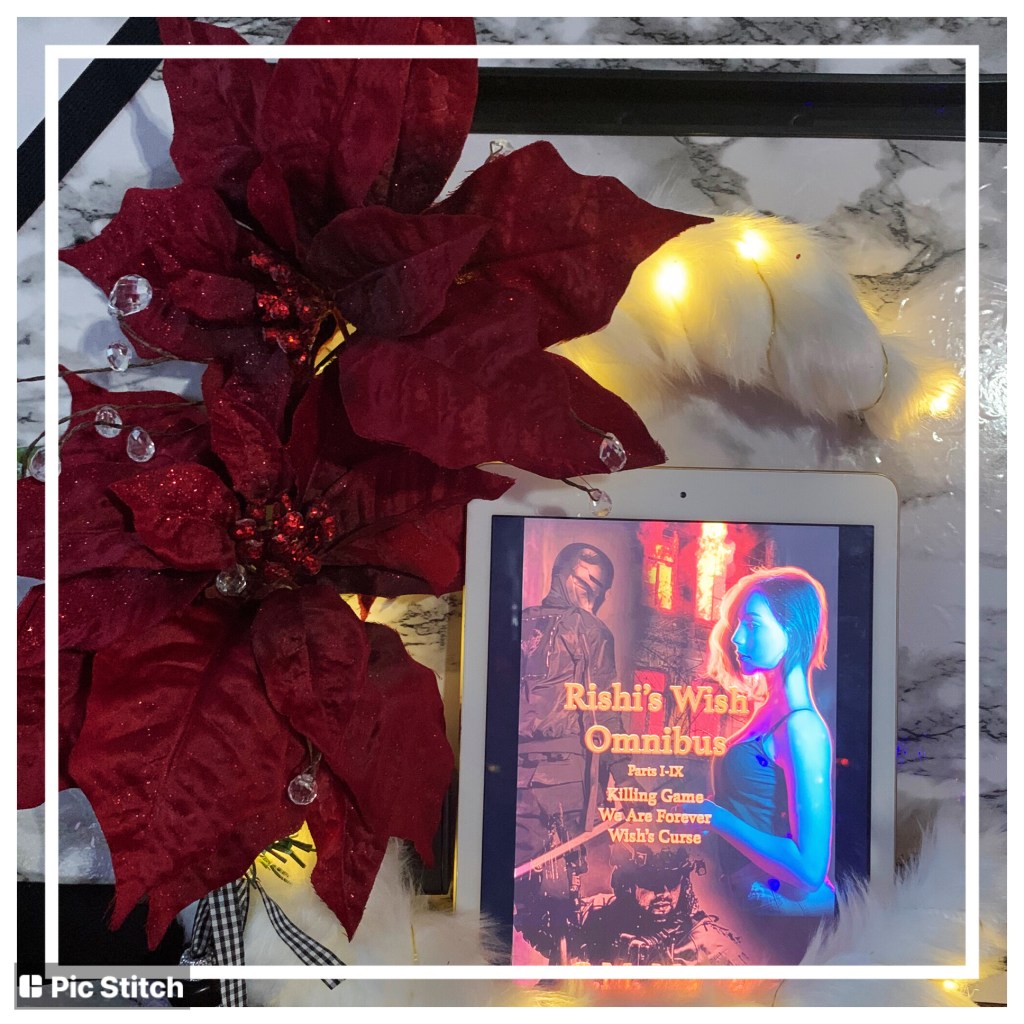
Every year I decide to release a book at Christmas. Every year I forget that if it’s not done by mid-October, I won’t have time to finish it. Still, it’s never finished in time and I’m scrambling to pull everything together. It works out, but just once I’d like to grow as a person 😉 This year was no different. I just got through 4 edits of a 124K word manuscript in 6 weeks. I feel like my brain has melted and anxiety is just my regular state.
But that’s not what I’m here to talk about. I’m here to say Happy Holidays! We celebrate Christmas in my house, though it’s less of a Christian festival and more of an exercise in wrapping my childhood nostalgia into a tangible event. For the past three years, I’ve done a fabulous job! This year’s looking great so far 🙂
Here’s hoping your winter season starts off as wonderful as mine!
The release of the movie Dune is a big deal for me (yeah, yeah- it doesn’t take much). My absolute most favorite story of all time, my absolute favorite character of all time, brought to the big screen with integrity paid to the themes of the book, is an exciting treat. But the only way I could see it was with my sister, who shares my love for the story. Since she lives in Syracuse and my current semi-permanent home is Somers, CT, some travel plans were needed. Not a problem. I enjoy the travel and it turned the weekend into something closer to a real adventure.
BY TRAIN
I have never been on a train and was excited to make this my first time. It’s a much slower form of travel than I expected. Apparently, I watch too many sci-fi movies where trains travel above cities at 200 mph. In this reality, with stops, a 3.5-hour drive is 6 hours by train. But that’s okay. I found the steady, elevated travel inspiring.
I wrote this as the train made its way from Springfield, Mass into the countryside:
“A train is a romantic way to travel. I’m thinking of Laura Ingels, her sister Mary traveling by train to and from her school for the blind. How different the countryside of the Midwest from the North-East? How different now from then?
Fall is setting in. The leaves just turning. Mostly green to contrast the changing colors. The sky bright and clear and blue. The fall typically means rain but not today. Today the universe wants me inspired. Today, I ride a train.
It’s the little things that can so largely influence perspective. Sitting up, higher than the freeway, higher than most roads, one can look down and out and across and away over the land. The golden stalks of harvested corn are like amber waves. The closeness of the trees, of the dirt and grass, makes the path much tighter than the many lanes paved for cars. At first disappointed we wouldn’t be traveling at 100 mph, I’m now glad. There is a peacefulness to this pace, to watching the land slip past.”
INCLUDING FRIENDS
Opening day is Friday, October 22 (we’re ignoring the blasphemy that HBOMax allowed an early release time). Friends that are going to see the movie with us can’t go until Saturday. Not okay.
So, we’ll go twice. Friday night and Saturday night.
Opening night, it’s a mostly packed house. The crowd is varied, which is fun to see. Couples my parent’s age sit near groups in their twenties. I wonder if it’s Dune they are here to see or just an epic-looking science fiction movie. It starts. The first chord of music tingle through the darkened room. Hans Zimmer is a master. Tears are in my eyes as the first scenes reflect from the big screen. The music is perfect. The sights are perfect. Already, I’m glad to see it again tomorrow and the first line of the movie has barely sounded. I know there will be too much to absorb from a single sitting.
SATURDAY
I’ve called home to talk about the greatness. There are a few flaws I can speak of, but petty overthinking and more for the point of conversation than that they tainted the film in any way. But I can’t talk about these specifics because I can’t give anything away to those who haven’t seen it yet. A third viewing is planned.
Watching it a second time is better than the first. All the details you can watch for when you already know the overview.
BACK ON THE TRAIN
Headed East and North, the train is delayed and I’m worried there won’t be time to see the movie again this evening. There is always tomorrow, but I’m hoping not to wait. Sure, I’ve seen it twice but I want more!
WHY DUNE
Paul Atreides is arguably one of the best characters in fiction, especially if you’re arguing with me. “A great man doesn’t seek to lead. He is called to it,” his father says to him before they leave their home planet. At that moment, in all of Paul’s fifteen years of wisdom, he feels he will never have the need. He has a moment of peace when the future he’s already glimpsed isn’t real. When the need does arise, when Paul is called, he is both compelled to sabotage the moment as well as take up the mantel. The horrible acts he sees in his future, a future, if he accepts, will subjugate atrocities on all of humanity, is weighed against what that future would be without it. So great is his burden, he considers allowing his own death to eliminate his responsibility for the future. It is Paul’s prescience, a genetic inheritance come a generation early, enhanced by the psychedelic properties of the spice harvested on Dune, that allow him this sight. Even before he steps foot on Dune, glimpses of possible futures plague him. Once the spice enters his system, just the small amounts caught on the wind of the planet, he sees more and more; sees multiple paths that he might play god and decide the fate of all.
I’ll leave it to that. If you haven’t seen the movie, or haven’t read the books so don’t know what’s coming, I won’t spoil it. There is so much to explain, I won’t do it justice anyway. It’s really hard to talk about things in a blog post…
Tell me what you thought of the movie. Do you know the Atreides story, or is the movie your introduction into herbert’s universe?
Happy Reading (and watching) 🙂 CMM
*Sign up for my newsletter and stay up-to-date on my goings-on. This post is an extension of my latest letter.*
It’s crazy how long things might sit before I get to it. This email sat in my inbox for almost a year before I actually clicked on it. I guess this was the time I needed to read this article. Maybe it will help you as well 🙂
Everyone wants “it all,” but you often find that the few people who have everything they want actually filter a lot of seemingly important activities out of their lives. According to Psychology Today, this is because the average person is constantly making decisions – possibly up to 35,000 a day – and each one negatively impacts our focus and willpower. Therefore, when top performers minimise the number of trivial decisions they make per day, they retain more mental energy, which allows them to excel in their chosen fields.
On this topic, Eminem admits that he does practically nothing else when working on an album, and that tactic has made him one of the most accomplished rappers alive. Late Apple CEO Steve Jobs reportedly wore the same turtleneck every day to free up his decision-making power, a habit he attributed to his success as the head of a global company. Showing a similar mentality, Bruce Lee once said, “The successful warrior is the average man with laser-like focus.”
On a fundamental level, we all understand the power of simplicity. Think about the most common advice bestselling authors give on podcasts: writing a new book is the best way to market your last one; produce lots of content in one genre; advertising is easier when you have a bigger backlist. The message there is clear. Those who write lots of books in one genre tend to experience success.
So why do we continue to distract ourselves learning social media tricks, genre hopping and watching Netflix? Why do we make so many needless decisions and leave ourselves mentally frazzled? Understanding this particular ailment of the human condition might be a little ambitious for one blog post. What we can do, though, is treat the symptoms. Read on for tips that will help you reduce your decision fatigue and optimise your productivity.
Prioritize One Thing
In a meta way, your first priority should be to identify your priority work. What activity will have the greatest impact on your author business? It’s probably writing, of course, but you need to be more specific if you want to make a goal air-tight against excuses. If you have lots of unfinished manuscripts then settle on one book and don’t work on another project until it’s finished. If you have several incomplete series, consider writing more instalments in whichever one generates the most income. No multitasking or project-switching. Only then will you see your results advance at lightspeed.
Your one thing doesn’t have to be writing. That’s just a common factor that will benefit most authors. If you’re already prolific then learning how to advertise profitably might deliver you the greatest results, at least in the short term. For an author with 15 books and a stable stream of royalties, mastering Facebook, Amazon or BookBub ads could double book sales overnight, even without a new release. Whichever ads platform you choose to learn, committing to one at a time is the key to mastery. Not only does a singular focus make you less likely to be overwhelmed by decision fatigue but having only one brand of ads running at once will make it easier to track cause and effect, which will make you a better marketer.
Disconnect from the Internet
Everything is online: all the information and all the entertainment. And it only takes a momentary lapse in concentration to slide from book research to cat videos. Not only does this impulsive behaviour eat into your time but it also drains your capacity to think clearly. Every click and scroll contributes to your expanding brain fog. Websites and apps are essentially display cases of brightly coloured buttons, images, GIFs and videos. Browsing just one page can force your brain make dozens of choices:
Should I like that post?
Should I enter my email address?
Should I Google the lifespan of a platypus? (It’s 17 years.)
This approachable, all-knowing vampire will suck you dry. What’s worse, each unnecessary decision you make saps you of a little more willpower. This means that every second you’re online you become more susceptible to the temptations of passive browsing, you make more low-quality decisions and you become more likely to abandon your writing altogether because it requires too much brainpower.
Science indicates that once this spiral is set in motion, it becomes increasingly difficult to escape. Willpower is not enough. That’s why avoiding the internet altogether during your dedicated work hours (preferably in the morning) will drastically improve your energy retention and allow you to keep making wise decisions later into the day. Once you’ve achieved everything on your to-do list, you can swipe, browse, like and share as much as you want, confident that a good night’s sleep will fully replenish your willpower for the next morning.
Eradicate Lifestyle Decisions
Earlier in this post we touched on Apple’s late CEO, Steve Jobs, and how he habitually wore the same black turtleneck and jeans every day. Look into it and you will find that Facebook’s Mark Zuckerberg follows a similar regimen. So did Barack Obama during his time at the oval office. The reason isn’t laziness. Actually, it’s the opposite. They all realised that, by stripping unnecessary decisions from their lives, like which clothes to wear, they became more able to make effective billion-dollar decisions.
This habit isn’t exclusively for the one percent, ether. It doesn’t require cash, a private jet or superhuman strength. Anyone can pre-plan what clothes they wear all week, what to cook and when to exercise. In fact, doing so will make you more likely to get ready quicker, eat healthily and train consistently when everything is already organised and sticking to your plan becomes the path of least resistance.
Keeping your laptop stationed at the same workspace every day will have a similar effect, reinforcing your writing habit by minimising the effects of decision fatigue. Try it: find and eradicate as many unnecessary choices from your day as you can. It will make you more likely to start work and more able to stay in the flow state once you have begun.
Take Proper Breaks
Self-development “gurus” talk a lot about structuring your work blocks but they rarely address how you can benefit from structuring your breaks. That might seem counterintuitive at first glance. “I thought the point of a break was to forget about structure and relax,” you might say. And, in part, it is. But if you don’t consider setting some rules and limits, your breaks can easily become the Achilles heel of your productivity plan, and I don’t just mean when you let them run for longer than intended. Long or short, a poorly-executed break can actually have a detrimental effect on the time you do spend working.
Think about it this way: how do you take a break? Do you close your laptop, push it aside and immediately start browsing the internet on your phone? Don’t worry, we all do it occasionally. While passive browsing might feel relaxing because it soothes our internet addition, as we have already learned, the internet is an energy vampire. Thus, it doesn’t count as a proper break.
A better option would be to do something that doesn’t involve a screen. Perhaps sit quietly in the garden or brew a cup of tea. Fold laundry. Stroll around the block. Just be sure to keep a tight rein on how long your breaks last or that short relief period can easily turn into more than an hour. Set a timer if you need to. Think of it as a reverse-Pomodoro, a way to concentrate on true relaxation for a specific block of time.
Get Moving
Speaking of strolling, according to studies conducted at Harvard Medical School, walking once a day will boost your mental capacity in the short term, such as before a test or creative writing session. In addition, it also slows your brain’s decline over a span of decades, therefore enabling you to stay sharp for longer.
For writers, walking has two standout benefits. Firstly, a walk (without your phone) forces you to step away from screens and reduces the temptation to trawl the internet during a break. Secondly, it stimulates subconscious thought. Have you ever noticed that eureka moments often arrive when you’re jogging or traipsing around a shopping mall? That’s because aerobic activities, much like sleep, encourage you to enter a meditative state. In doing so, your subconscious mind starts to wander and process ideas you’ve accumulated throughout the day. What this means is that exercise will both distance you from distractions and help you overcome story issues that might have been halting your progress.
Using just one of these strategies can enhance your energy levels during a writing session. A combination of them has the power to supercharge your productivity, discipline and stamina, meaning you will be able to write better, faster, and for longer than ever before.
One of my favorite quotes come from All The Bright Places and comments on said fact.
Writing is so difficult that writers, having had their hell on earth, will escape all punishment hereafter.
And first drafts. Seriously, they can suk it. Like, all of it. They make me wonder if my brain even works. Do I sound like this big of a moron when I speak? I need to stop speaking. Like, when you go back to some quickly jotted notes, and you can’t decipher your own writing, that’s what a first draft is to my thoughts. I’m reading what must be a sentence. There’s a period at the end of a string of words. That’s a sentence, right? But this makes all kinds of sense that is nonsense. How am I supposed to EDIT this into coherency when there isn’t even a base coherency to be found?!
But, somehow, it gets there. Probably with multiple missed chances at brilliance. Those pure moments of genius that didn’t form themselves well onto the page because my meager human existence struggled to decipher, it and it’s now lost forever. Who knows? Maybe my basic fun, adventure novels were meant to be more, if only I’d trained my brain to translate from the muses better.
It’s a question I often see on author posts, asking what part of the processes is their most and least favorite. I could never answer. Well, I can now. First Drafts can SUUUUUK it.
Needless-to-say, I’m a little bit with the struggles right now on my current first draft. It’s not even that I don’t know where its going, or where it is, or what I want to happen. I have a plan for this story. I’ve even written the ending. But I just can’t get the words onto the page.
Maybe I should be the one sukkin it. Maybe I’m just having an aversion to work, because the first draft, I think, is where the most work goes in. The literal creation of something from nothing. I like when it’s finally here, when I can go in and fine-tune, when I can sculpt a clean product from the ragged suggestion of it. That means, finishing this first draft. *insert annoyed, toddler-tantrum expression here*
What do you think? Are you sukkin first drafts, too? Or you just think I don’t have the chops? Go on, be honest 🙂





 Author C.M. Martens